


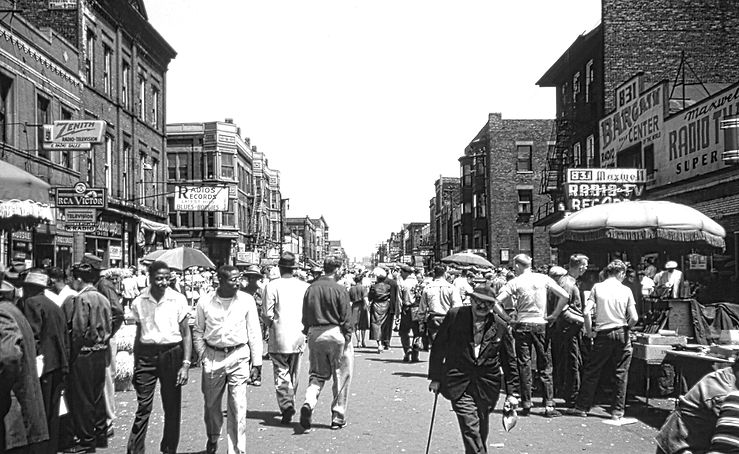
Dedicated to




ABOUT US

Devil’s Tale Music is dedicated to the early electric blues tradition (1937–1953), with a primary focus on the scenes surrounding KFFA in Helena, Arkansas; Maxwell Street in Chicago; Memphis; and Hastings Street in Detroit.
During this period, a raw electric sound emerged—rooted in country blues and small ensemble playing—using small amplifiers, simple archtop guitars, and minimal recording techniques. Sessions were often captured with only a few microphones and released by small, independent labels such as Trumpet, Ora Nelle, Tempo-Tone, Parkway, JOB, Chance, and Marvel, among others.
Devil’s Tale Music exists to document, study, and preserve this transitional era, when blues guitar moved from acoustic to amplified settings while maintaining restraint, time, and ensemble balance.
A partial list of musicians who helped define and pioneer this idiom includes:
John Lee Williamson, Robert Nighthawk, Houston Stackhouse, Willie Love, Rice Miller, Robert Jr. Lockwood, Joe Willie Wilkins, Muddy Waters, Jimmy Rogers, Sunnyland Slim, Leroy “Baby Face” Foster, Little Walter, Blue Smitty, Snooky Pryor, Moody Jones, Floyd Jones, Bernard Abrams, Louis Myers, Dave Myers, Junior Wells, Jimmy Reed, Eddie Taylor, Johnny Shines, Johnnie Jones, St. Louis Jimmy, Eddie Boyd, Joe Von Battle, Big Boy Crudup, Washboard Sam, Big Bill Broonzy, Tampa Red, Memphis Minnie, Little Son Joe, Willie Nix, Little Hudson, Johnny Young, Big Maceo, Walter Davis, Baby Boy Warren, Eddie Burns, Calvin Frazier, John Brim, Elga Edmonds, Judge Riley, Fred Below, Jump Jackson, Odie Payne, Peck Curtis, Calvin Newborn, Willie Johnson, Joe Hill Louis, Big Crawford, and Ransom Knowling.